SMILE vs LASIK: Which Laser Eye Surgery is Right for You?
July 15, 2026
Can Cataracts Return After Surgery? Everything You Need to Know
August 29, 2026
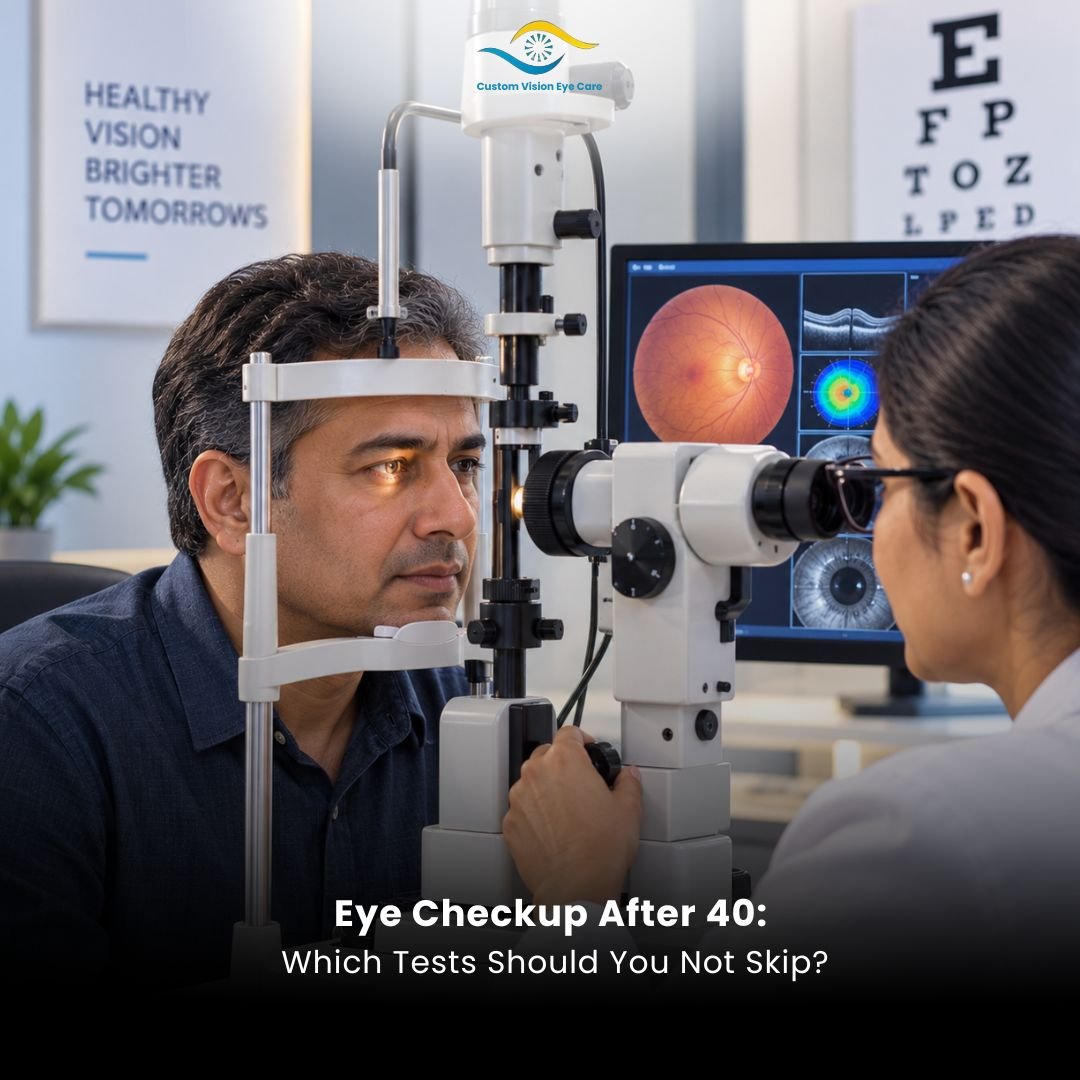
Turning 40 is an important milestone for your eye health. Even if your vision seems perfectly clear, age-related changes can begin affecting your eyes without obvious symptoms. Conditions such as presbyopia, glaucoma, cataracts, retinal problems, and changes related to diabetes or high blood pressure may become increasingly relevant as you get older.
This is why regular eye tests after 40 are important. A comprehensive eye examination goes beyond checking whether you need glasses—it helps your ophthalmologist assess different structures of the eye and identify changes that may require monitoring or treatment.
So, which tests should be part of your eye checkup after 40? Here’s what you should know
Why Is an Eye Checkup Important After 40?
Around the age of 40, the natural lens inside the eye gradually becomes less flexible. This can make focusing on nearby objects more difficult, a common age-related condition called presbyopia. But reading difficulty isn’t the only reason to schedule an eye examination.
After 40, regular eye examinations can help detect or monitor conditions such as:
- Presbyopia
- Cataracts
- Glaucoma
- Dry eye
- Retinal disorders
- Diabetic retinopathy
- Age-related macular changes
- Changes in refractive error
Some eye diseases can progress before you notice significant changes in your vision. Regular eye tests after 40 therefore provide an opportunity for earlier detection and appropriate management.
1.Visual Acuity Test
The visual acuity test is one of the most familiar parts of an eye examination. You are usually asked to read letters or symbols from an eye chart at a specified distance. Each eye is tested separately.
This test evaluates how clearly you can see and may help identify changes in:
- Nearsightedness
- Farsightedness
- Astigmatism
- Overall distance vision
Even if you already wear glasses, your prescription can change over time.
- Refraction Test
If your visual acuity has changed, your ophthalmologist may perform a refraction test. During this test, different lenses are placed in front of your eyes to determine which combination provides clearer vision.
A refraction test helps determine whether you require:
- New glasses
- An updated prescription
- Reading glasses
- Bifocal or progressive lenses
After 40, changes in both distance and near vision may make regular prescription checks increasingly important.
- Near-Vision and Presbyopia Assessment
Do you find yourself holding your phone farther away to read? Have restaurant menus suddenly become difficult to see in dim lighting?
These can be signs of presbyopia. Presbyopia commonly becomes noticeable after approximately age 40 because the natural lens of the eye gradually loses some of its ability to focus at close distances. A near-vision assessment can determine the extent of the problem and whether reading glasses, progressive lenses, or another vision correction option may help.
- Eye Pressure Test for Glaucoma
An important component of eye tests after 40 is measuring intraocular pressure (IOP), commonly referred to as eye pressure. Elevated eye pressure can be an important risk factor for glaucoma. Glaucoma can damage the optic nerve, and some forms may develop gradually without noticeable early symptoms. This is why relying only on how well you can see isn’t enough to rule it out.
However, eye pressure alone does not diagnose glaucoma. Your ophthalmologist may evaluate several other factors depending on your findings and risk profile.
- Optic Nerve Examination
The optic nerve carries visual information from your eye to your brain. During an eye examination, your ophthalmologist may assess the appearance of the optic nerve for changes that could indicate glaucoma or another optic nerve disorder.
If something unusual is detected, additional investigations may be recommended. These can include optic nerve imaging or visual field testing.
- Slit-Lamp Examination
A slit lamp is a specialized microscope that allows an ophthalmologist to examine the structures at the front of your eye under magnification.
It can be used to examine the:
- Cornea
- Conjunctiva
- Iris
- Natural lens
- Eyelids
- Tear film
A slit-lamp examination can help identify several conditions, including dry eye, corneal abnormalities and cataract-related changes.
- Cataract Evaluation
Cataracts become increasingly common with age, although they do not affect everyone at the same age or progress at the same rate. A cataract occurs when the normally clear natural lens inside the eye becomes cloudy.
Possible symptoms include:
- Blurred or cloudy vision
- Increased glare
- Halos around lights
- Difficulty driving at night
- Faded colours
- Frequent changes in spectacle power
During your examination, the ophthalmologist can assess the natural lens and determine whether cataract changes are present. Not every cataract requires immediate surgery. Treatment decisions depend on factors such as the extent of the cataract and how much it affects everyday activities.
- Dilated Retinal ExaminationThe retina is the light-sensitive tissue at the back of the eye. For a more detailed examination, your ophthalmologist may use eye drops to temporarily enlarge your pupils. This allows a broader view of the retina and other structures at the back of the eye.
A dilated retinal examination can help identify signs of:
- Retinal tears or abnormalities
- Diabetic retinopathy
- Macular problems
- Changes affecting retinal blood vessels
- Other retinal conditions
Temporary blurred near vision and sensitivity to bright light can occur after pupil dilation, so follow your clinic’s instructions after the examination.
- Visual Field Test
Your visual field includes what you can see centrally and toward the sides while looking straight ahead. A visual field test measures different areas of your vision and may be recommended when glaucoma or certain neurological or retinal conditions are suspected or being monitored.
Because some glaucoma-related vision loss can begin in the peripheral visual field, you may not notice the change yourself during the early stages. Your ophthalmologist will determine whether this test is necessary based on your examination.
- OCT Scan When Recommended
Optical Coherence Tomography (OCT) is a non-invasive imaging test that produces detailed cross-sectional images of structures within the eye. Depending on the type of OCT performed, it can help evaluate the:
- Retina
- Macula
- Optic nerve
- Retinal nerve fibre layer
OCT may be particularly useful when evaluating or monitoring conditions such as glaucoma and certain retinal or macular disorders. It is not necessarily required at every routine eye examination. Your ophthalmologist may recommend it based on your symptoms, risk factors, or clinical findings.
- Diabetic Eye ExaminationIf you have diabetes, regular retinal examinations become especially important. Diabetes can damage small blood vessels in the retina, resulting in diabetic retinopathy. Importantly, early stages may not always cause noticeable vision problems. A diabetic eye examination may involve pupil dilation, retinal evaluation and additional retinal imaging when clinically appropriate. The frequency of examinations should be determined by your ophthalmologist based on your diabetes, retinal findings, and overall health.
- Dry Eye Assessment
Dry eye can cause more than just a sensation of dryness.
Symptoms may include:
- Burning
- Grittiness
- Redness
- Intermittent blurred vision
- Eye fatigue
- Sensitivity to light
- Excessive watering
Interestingly, watery eyes can sometimes occur when the ocular surface is irritated. If you spend long hours working on computers or mobile devices, tell your ophthalmologist about your screen habits during your examination.
How Often Should You Have Eye Tests After 40?
There isn’t one examination schedule suitable for everyone. The frequency of eye tests after 40 depends on your age, existing eye conditions, family history, general health and individual risk factors.
You may require more frequent examinations if you:
- Have diabetes
- Have high blood pressure
- Have a family history of glaucoma
- Have high myopia
- Previously underwent eye surgery
- Have an existing retinal or corneal condition
- Take medications that may affect the eyes
- Experience new or changing visual symptoms
Your ophthalmologist can recommend an examination schedule appropriate for your individual eye health.
Eye Symptoms You Shouldn’t Ignore After 40
Don’t wait for your next routine appointment if you develop a sudden or significant change in vision.
Seek prompt professional evaluation for symptoms such as:
- Sudden loss of vision
- Sudden onset or increase in floaters
- Flashes of light
- A curtain or shadow across your vision
- Significant eye pain
- Sudden double vision
- New distortion of central vision
- Red eye accompanied by significant pain or vision changes
Some eye problems require urgent assessment, so early evaluation can be important.
Can You Have an Eye Disease Even If Your Vision Is Clear?
Yes. Clear central vision does not necessarily mean every structure of the eye is healthy. Certain eye conditions may initially produce few noticeable symptoms. For example, some forms of glaucoma can progress gradually before a person becomes aware of peripheral vision changes.
This is one reason comprehensive eye tests after 40 are more valuable than simply checking whether your spectacle number has changed.
What Should a Comprehensive Eye Checkup After 40 Include?
The exact examination varies from person to person, but your ophthalmologist may assess:
- Visual acuity
- Refractive error
- Near vision
- Eye pressure
- Cornea and anterior eye structures
- Natural lens and cataract changes
- Optic nerve
- Retina
Depending on the findings, additional investigations such as OCT, visual field testing or specialized retinal imaging may be recommended.
Eye Checkup After 40 at Custom Vision Eye Care, Pune
Regular eye examinations become increasingly important as you enter your 40s and beyond.
At Custom Vision Eye Care in Pune, a comprehensive eye evaluation can help assess changes in vision and screen for conditions affecting the lens, optic nerve, retina and other structures of the eye. Whether you’re noticing difficulty reading small text, increased glare while driving, changing spectacle power, dry eyes, or simply haven’t had your eyes examined recently, scheduling a professional eye checkup can help you understand your current eye health.
Conclusion
Your 40s are a good time to make comprehensive eye examinations a regular part of your health routine. Eye tests after 40 can assess changing spectacle needs while also helping identify cataract, glaucoma, retinal problems and other age-related eye changes. At Custom Vision Eye Care, Pune, comprehensive eye evaluations can help you understand your vision and eye health based on your individual needs and risk factors.
Don’t wait until your vision noticeably changes. Regular examinations and timely evaluation of new symptoms can play an important role in protecting your eyesight as you age.