
Can Cataracts Return After Surgery? Everything You Need to Know
August 29, 2026
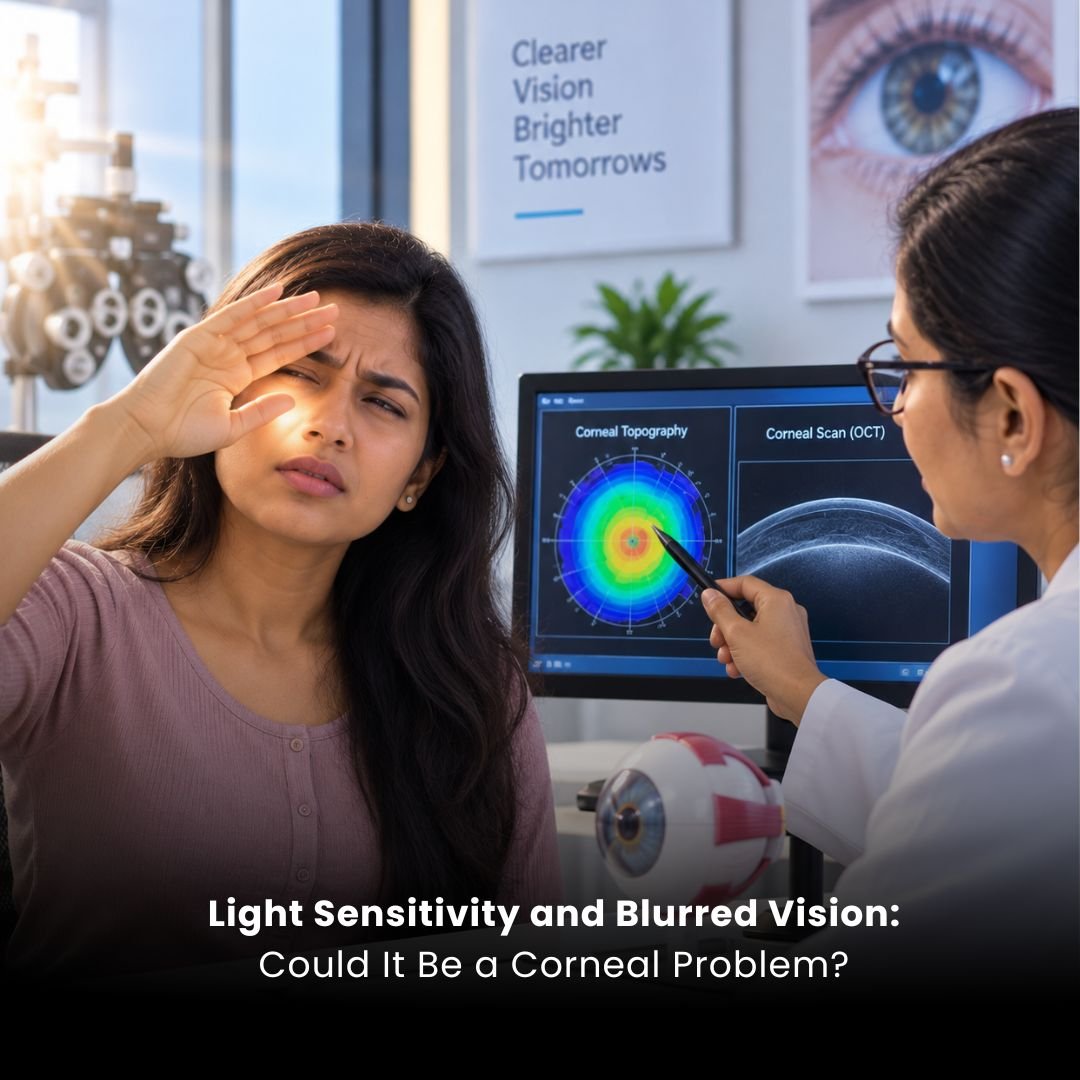
Light sensitivity and blurred vision can happen for many reasons, from dry eyes and eye strain to problems affecting the cornea. When these symptoms persist, become painful, or occur with redness and watering, they should not be ignored. The cornea is the clear, dome-shaped front surface of the eye. It plays an important role in focusing light so that you can see clearly. Changes in its shape, transparency, or health can therefore affect vision.
Understanding common corneal problem symptoms can help you recognize when it may be time to consult an ophthalmologist or cornea specialist.
Can Corneal Problems Cause Light Sensitivity and Blurred Vision?
Yes. Corneal conditions can cause blurred vision and sensitivity to light because the cornea is responsible for helping focus incoming light. Infections, inflammation, injuries, scarring, irregular corneal shape, and other disorders can interfere with this process and affect vision. However, these symptoms are not specific to corneal disease. A comprehensive eye examination is needed to identify the underlying cause.What Are the Common Corneal Problem Symptoms?
The symptoms vary depending on the condition and its severity. Some common corneal problem symptoms include:- Blurred or distorted vision
- Increased sensitivity to light (photophobia)
- Eye redness
- Eye pain or discomfort
- Excessive watering
- Foreign-body or gritty sensation
- Difficulty seeing clearly at night
- Halos or glare around lights
- Frequent changes in spectacle power
- Reduced clarity of vision despite glasses
- Eye irritation
Why Does a Corneal Problem Cause Blurred Vision?
The cornea needs to maintain a smooth, clear, and regular shape to focus light correctly onto the retina. When the cornea becomes swollen, scarred, infected, injured, or irregularly shaped, light may no longer focus properly. As a result, vision can appear blurry, distorted, or hazy. For example, keratoconus causes progressive thinning and bulging of the cornea. This changes its shape and can result in irregular astigmatism and increasingly distorted vision.Why Can Corneal Problems Make Your Eyes Sensitive to Light?
Light sensitivity, medically known as photophobia, can occur when the cornea becomes irritated, inflamed, injured, or infected. Bright sunlight, indoor lighting, headlights, and digital screens may become uncomfortable. Photophobia accompanied by significant eye pain, redness, sudden blurred vision, or discharge should be evaluated promptly because it may indicate a condition requiring medical treatment.Which Corneal Conditions Can Cause These Symptoms?
Several corneal conditions can cause blurred vision, light sensitivity, or both.- Keratoconus Keratoconus occurs when the cornea becomes thinner and gradually develops a cone-like shape. Possible symptoms include:
- Blurred or distorted vision
- Increasing astigmatism
- Frequent changes in spectacle prescription
- Glare and halos
- Difficulty with night vision
- Light sensitivity
- Corneal Infection Corneal infections, also known as infectious keratitis, may be caused by microorganisms such as bacteria, fungi, viruses, or parasites. Symptoms can include significant pain, redness, blurred vision, watering, discharge, and sensitivity to light. Contact lens users should be particularly careful about lens hygiene because improper use can increase the risk of certain corneal infections.
- Corneal Ulcer A corneal ulcer is an open sore on the cornea, often associated with infection. It may cause:
- Severe eye pain
- Redness
- Blurred vision
- Light sensitivity
- Excessive tearing
- Discharge
- Corneal Dystrophies Corneal dystrophies are a group of conditions in which abnormal material can accumulate within different layers of the cornea. Depending on the type, symptoms may include blurred vision, glare, discomfort, recurrent corneal erosions, or light sensitivity.
- Dry Eye Disease The tear film forms an important part of the eye’s optical surface. When it becomes unstable, the corneal surface may become irritated. Dry eye can cause fluctuating blurred vision, burning, grittiness, watering, redness, and sensitivity to light. Persistent symptoms deserve an eye examination rather than relying only on over-the-counter eye drops.
Could Frequent Changes in Glasses Power Indicate a Corneal Problem?
Sometimes. If your spectacle prescription, especially astigmatism, changes frequently and your vision remains distorted despite updated glasses, your ophthalmologist may investigate the shape of your cornea. This can be particularly relevant when evaluating conditions such as keratoconus. Tests such as corneal topography or tomography can provide detailed information about the shape and curvature of the cornea.When Should You See a Cornea Specialist?
Consider an eye examination if you have persistent:- Blurred or distorted vision
- Light sensitivity
- Eye discomfort
- Recurrent redness
- Frequent changes in spectacle power
- Difficulty seeing at night
- Halos or glare
- Problems wearing contact lenses
How Are Corneal Problems Diagnosed?
Diagnosis starts with a detailed eye examination. Depending on your symptoms, an ophthalmologist may perform tests such as:- Slit-lamp examination: Allows detailed examination of the cornea and other structures at the front of the eye.
- Corneal topography or tomography: Maps the shape and curvature of the cornea and can help identify conditions such as keratoconus.
- Pachymetry: Measures corneal thickness.
- Visual acuity and refraction: Determine how clearly you can see and whether corrective lenses improve your vision.