Cataract surgery is one of the safest and most successful eye procedures, helping millions of people regain clear vision every year. However, many patients have one common concern after surgery:
Can cataracts return after surgery?
The simple answer is No. Once a cataract is removed, it cannot grow back.
However, some people may experience blurred vision months or even years after cataract surgery due to a condition called Posterior Capsule Opacification (PCO), often referred to as a “secondary cataract.” Although it causes symptoms similar to cataracts, it is not a new cataract.
In this guide, we’ll explain why cataracts don’t return, what causes blurred vision after surgery, and how it can be treated quickly and safely.
What Is a Cataract?
A cataract develops when the natural lens of the eye becomes cloudy, causing blurry vision, glare, poor night vision, and difficulty performing everyday tasks.
Common causes include:
- Age-related changes
- Diabetes
- Eye injuries
- Long-term steroid use
- Previous eye surgeries
- Genetic factors
Cataracts are a progressive condition and can only be treated through surgery.
What Happens During Cataract Surgery?
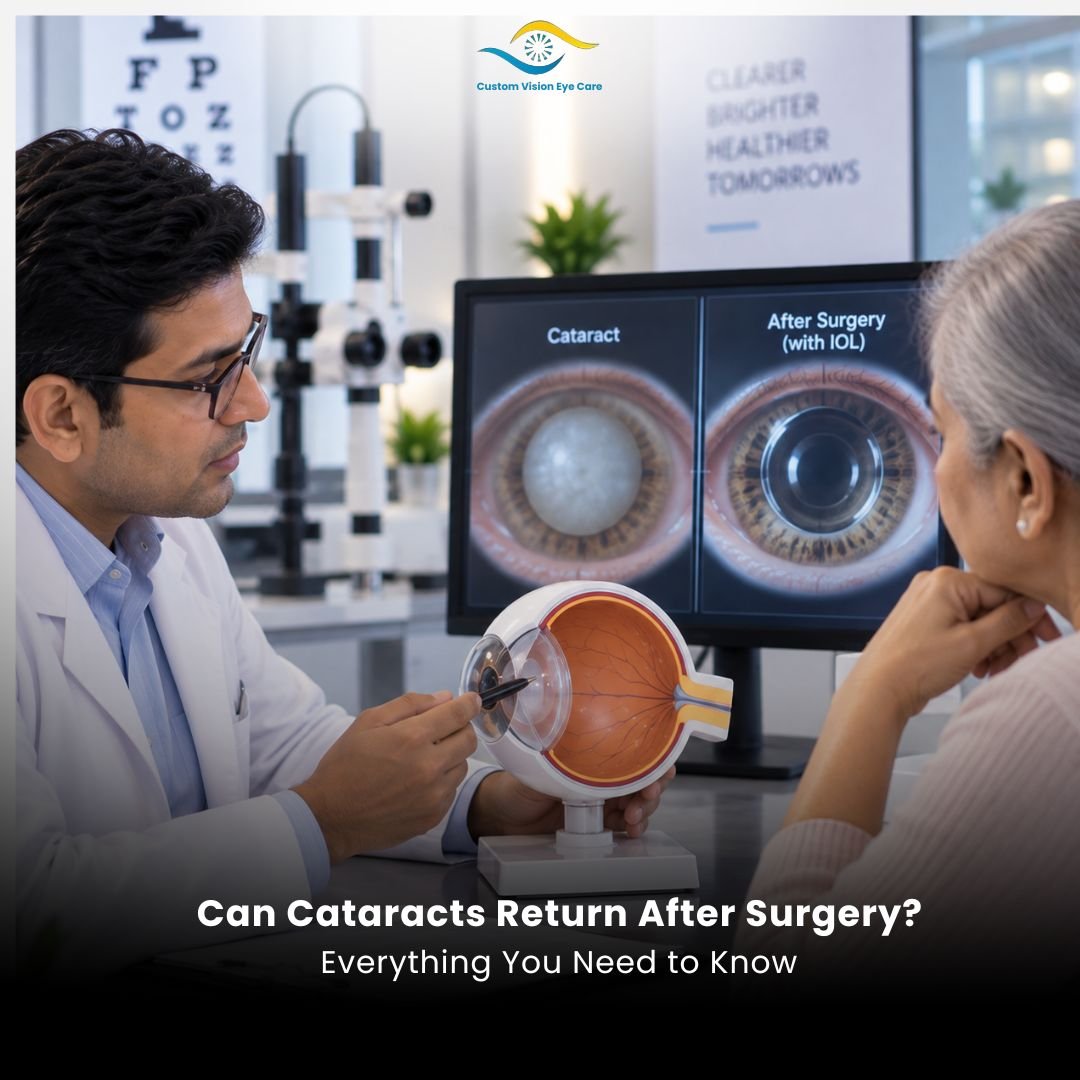
During cataract surgery, your ophthalmologist removes the cloudy natural lens and replaces it with a clear Intraocular Lens (IOL). Since the cloudy lens is permanently removed, it cannot grow back. This is why cataract surgery provides long-term vision improvement for most patients.
Why Do Some People Think Cataracts Have Returned?
If vision becomes blurry months or years after surgery, patients often assume their cataracts have come back. In reality, the most common reason is Posterior Capsule Opacification (PCO).
During cataract surgery, the thin capsule that holds the artificial lens is left in place to support the new lens. Over time, this capsule may become cloudy because of the growth of residual lens epithelial cells.
This condition is known as:
- Posterior Capsule Opacification (PCO)
- Secondary Cataract
- After Cataract
Although the symptoms resemble cataracts, it is not the original cataract returning.
Symptoms of Posterior Capsule Opacification
You may notice:
- Blurred or cloudy vision
- Increased glare from lights
- Difficulty driving at night
- Reduced contrast sensitivity
- Double vision in one eye
- Difficulty reading
- Vision that gradually worsens after initially improving
These symptoms may appear several months or even years after cataract surgery.
How Common Is Secondary Cataract?
Posterior Capsule Opacification is relatively common.
Studies show that approximately 20–30% of patients may develop PCO within a few years after cataract surgery. The risk varies depending on factors such as age, eye health, and the type of intraocular lens used.
Advances in modern surgical techniques and premium intraocular lenses have significantly reduced the incidence of PCO.
Can Posterior Capsule Opacification Be Treated?
Yes.
The good news is that PCO is quick, painless, and highly treatable with a procedure called Nd: YAG Laser Capsulotomy.
This laser treatment creates a small opening in the cloudy capsule, allowing light to pass through clearly again.
The procedure usually:
- Takes only a few minutes
- Requires no stitches
- Is performed as an outpatient procedure
- Involves minimal recovery time
- Provides rapid improvement in vision
Most patients notice clearer vision within a day or two.
Is YAG Laser Treatment Safe?
Yes.
YAG laser capsulotomy is considered a safe and effective procedure when performed by an experienced ophthalmologist.
Complications are uncommon, but your eye doctor will examine your eyes carefully before recommending treatment.
Can Posterior Capsule Opacification Return After Laser Treatment?
In most cases, no.
Once the cloudy portion of the capsule has been opened with the laser, it usually does not become cloudy again.
Only a very small number of patients may require further evaluation if new eye conditions develop later.
How to Keep Your Eyes Healthy After Cataract Surgery
Following your surgeon’s instructions can help ensure a smooth recovery and maintain good vision.
Here are some tips:
- Use prescribed eye drops regularly.
- Avoid rubbing your eyes.
- Protect your eyes from dust and injury.
- Wear sunglasses outdoors.
- Attend all scheduled follow-up appointments.
- Control diabetes and other chronic health conditions.
- Report any sudden changes in vision immediately.
When Should You See an Eye Specialist?
Contact your ophthalmologist if you experience:
- Sudden vision loss
- Severe eye pain
- Increasing redness
- Persistent blurred vision
- New floaters or flashes of light
- Difficulty seeing after an initially successful cataract surgery
Early evaluation can help identify the cause and ensure timely treatment.
Why Choose Custom Vision Eye Care for Cataract Surgery in Pune?
At Custom Vision Eye Care, we offer comprehensive diagnosis, advanced cataract surgery, and personalized post-operative care using modern technology.
Our services include:
- Advanced Cataract Surgery
- Premium Intraocular Lens (IOL) Options
- Comprehensive Eye Examinations
- Nd:YAG Laser Capsulotomy
- Retina Evaluation
- Glaucoma Screening
- Long-Term Post-Surgery Follow-Up
Our experienced ophthalmologists focus on providing safe treatment and helping patients achieve the best possible visual outcomes.
Conclusion
Cataracts do not return after surgery, because the cloudy natural lens is permanently removed and replaced with an artificial intraocular lens. If your vision becomes blurry after an initially successful surgery, the cause is often Posterior Capsule Opacification (PCO)—a common and treatable condition that is not the same as a recurring cataract.
With timely evaluation and a quick Nd:YAG laser capsulotomy, most patients regain clear vision without the need for another surgery.
If you’ve noticed changes in your vision after cataract surgery, don’t ignore them. A comprehensive eye examination by an experienced ophthalmologist in Pune can identify the cause and help restore your visual clarity.